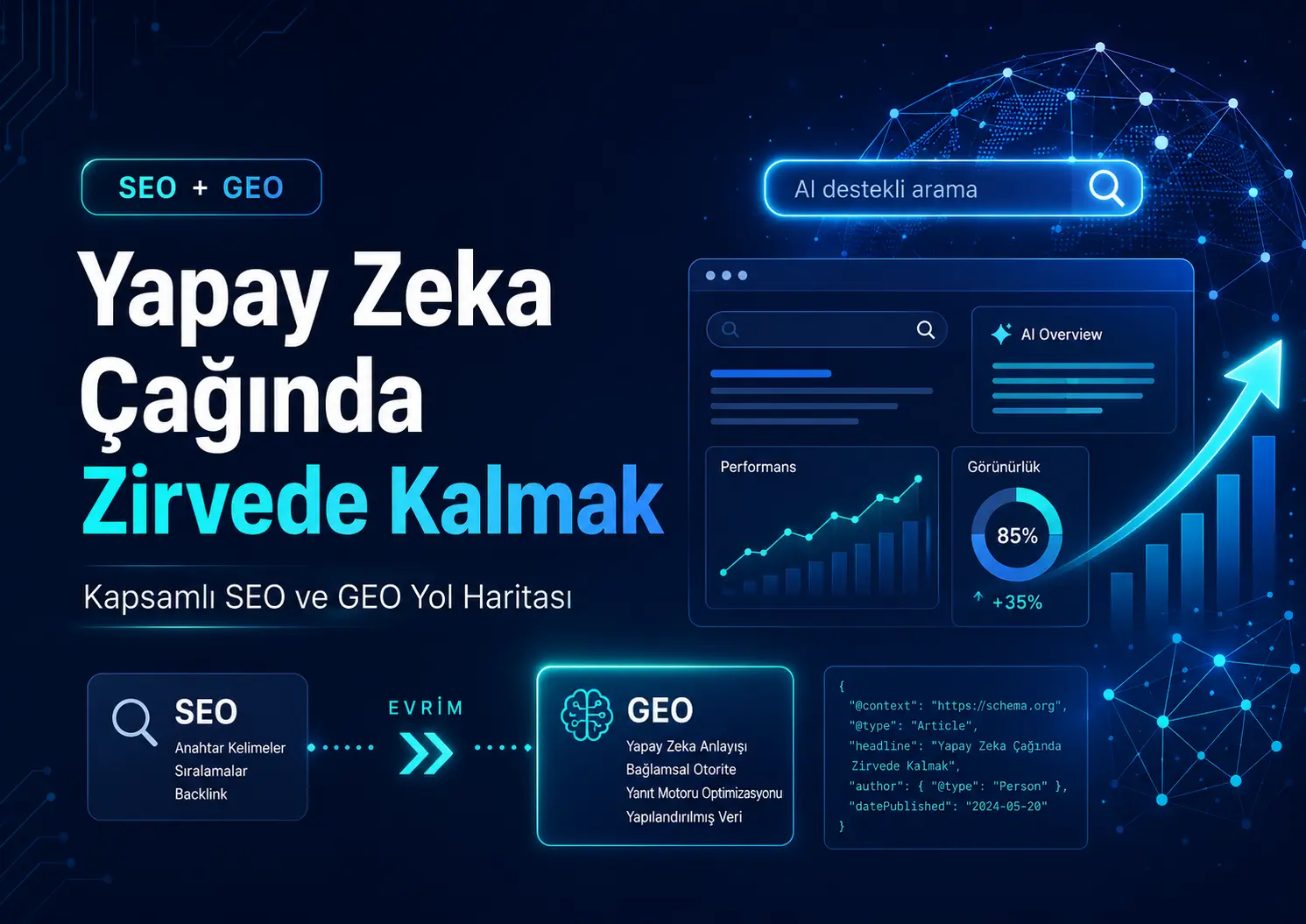
Staying Visible in the AI Era: A Comprehensive SEO and GEO Roadmap
Hello! The web is changing faster than ever. In the past, much of our attention went towards Google’s crawlers, often called spiders. The goal seemed simple: find the right keywords, place them strategically in the text, earn quality backlinks and wait for traffic.
Today, AI systems interpret content and try to understand what users mean. Tools such as ChatGPT, Perplexity and Google’s Search Generative Experience, now known as AI Overviews, are changing traditional search habits.
How can developers, content creators and brand owners adapt? This is where GEO — Generative Engine Optimisation enters the conversation. Grab a coffee and let’s put together a practical SEO and GEO roadmap, covering both technical foundations and content strategy.
1. Is Traditional SEO Dead? No — It Provides the Foundation
It is easy to assume that AI has made SEO obsolete. Instead, SEO forms the foundation. A technically healthy website is still important if AI-powered search tools are to find and recommend its content.
Technical SEO: A Landing Strip for AI
When automated systems access your website, the following matter:
Site Speed and Core Web Vitals: Slow pages make information harder to retrieve and process. Aim to avoid loading times beyond three seconds.
Mobile Responsiveness: Much of the world’s searching happens on mobile. A broken mobile experience undermines a website’s quality and credibility.
Clear Site Architecture and XML Sitemaps: Organise your site like a library. Algorithms should be able to understand which articles belong to which categories.
The Takeaway: Traditional technical SEO remains a foundation for GEO. Start with a solid structure.
2. What Is GEO? Search Intent and Semantic Context
GEO covers efforts to make content useful and discoverable as a cited source in AI-assisted search.
Where keyword matching once dominated, we now focus more on semantic search.
From Keywords to Concepts
Suppose your article targets “best laptops”.
Old SEO Thinking: Repeat the phrase 15 times and put it in the title.
A GEO Approach: What does the user mean by “best laptop”? Will they play games or write code? Your article should cover related topics such as RAM, processor generations, battery life, cooling systems and graphics requirements for developers. These related terms are often described as LSI — Latent Semantic Indexing keywords in SEO discussions.
The aim is for an AI system to recognise: “This author covers the topic and its subtopics in a complete context, making it a useful source.”
3. Speaking Clearly to Machines: Entity SEO and Schema
One useful technical area to explore is Entity SEO.
AI systems try to identify entities as well as words. “Apple” may refer to a fruit or a technology company. One way to clarify which entity you mean is structured data, or schema markup.
Small JSON-LD blocks can provide search engines with explicit information: “This is an Article, written by this Person, published on this date, and discussing Software Consulting.”
Labelling information reduces ambiguity and helps systems interpret the content when constructing answers.
4. E-E-A-T: The Value of First-Hand Experience
Google’s content quality framework, E-E-A-T — Experience, Expertise, Authoritativeness and Trustworthiness, becomes particularly valuable in the AI era.
ChatGPT can generate explanations of technical concepts. But it does not have your first-hand experience of rescuing a client’s server last month, or the specific steps you took to solve that problem.
Add Experience: Include first-hand evidence such as “In my experience…” or “We tested this in our last project and obtained these results…” in your articles.
Use Original Images: Replace generic stock photos with your own screenshots and diagrams.
Build Authority: Backlinks from trustworthy sources, such as universities, established news outlets or respected software blogs, can support credibility. References from reliable platforms help demonstrate expertise.
5. GEO Content Formatting Tactics
AI search tools often present concise answers within seconds. Content structure therefore matters alongside content quality.
Ask a Question, Then Answer It: Use questions as subheadings. For example, beneath “How Do You Optimise for GEO?”, write a clear summary of around 40–50 words. Short passages that answer a question directly are easier to extract and present.
Use Lists Effectively: Long paragraphs can be difficult for readers and automated systems to navigate. Break information into lists, tables and step-by-step processes, as this article does.
Use Data and Statistics: “Many people use mobile devices” is less specific than “According to Statista’s 2024 data, 58% of web traffic comes from mobile devices.” Well-supported statistical and academic evidence gives readers and AI systems something concrete to reference.
Make Comparisons: Comparisons such as “React vs Vue” or “Traditional SEO vs GEO” help readers and AI systems understand differences clearly.
Conclusion: Useful Content Still Matters
AI-powered search is changing how people use the internet. The underlying goal remains: Give the user the clearest, most accurate and most useful answer.
Move beyond counting keywords. Build credibility, maintain strong technical foundations and write for people in a structure that automated systems can also analyse. Bring your own experiences and evidence into the content.
Applying this roadmap consistently can support traditional search visibility and help your site become a useful reference for AI assistants.
What do you focus on when creating content? How has AI-powered search affected your traffic? Share your experience in the comments and let’s discuss it.



Comments (0)
No comments yet. Be the first!
Leave a comment